Thursday, January 14, 2010

Retail prices in US are falling

Suddenly, US retail prices has fallen in December 2009. A huge fall in prices was recorded in sales of electrical goods and cars.( hence prices for fuel, building materials and steel fell). US Commerce Department showed that prices fell by 0.3 % compared with November. 

This sudden declining in price was caused by decreasing in consumption. People consumed less than  over the festive season last year. Finally December sales has fallen by 6.2 % compared with last year. 

For many firms this event was unexpected, since they could experience declining in their profits. Concerns over job security are expected to continue to restrict spending, with unemployment still at 10%. Many economists expect unemployment to keep rising until the middle of the year. This event was experienced also in other big countries, such as UK, Japan, China, etc. But economists are expecting a warming (improvement) in economic situation next year. "I don't think that portends a new downturn in the economy, but it does serve as a warning that the recovery is going to take some time to put in place here," commented Chris Rupkey, chief financial economist at the Bank of Tokyo-Mitsubishi in New York.  


P.S.

I was really pleasant when I read (in the past) this chapter on BBC, because my headphones have just broken and I realized that I had a good opportunity to buy it (prices has declined). Unfortunately, I realized that this chapter was about US retail prices!!!!!. When I went to the  shop in Oxford, I saw the same price as 3 month ago((((( 79 POUNDS (((( 

Sunday, January 10, 2010

Interest rate

Reasons for changes in interest rate (determinants of interest rate)

- consumption. When people are taking borrowings (loans), they usually spend this money immediately (they buy cars, houses, trips, etc.). So people prefer goods now, not in the future, that why demand for loans is increasing and , therefore, in a free market system there will be a positive interest rate (growing interest rate).

- inflationary expectations (expectations about inflation rate in the nearest future). The lender ( a person who gives a loan) has to secure from expecting losses because of increasing rate of inflation. 

- risks of investment. There is always a risk that the borrower will go bankrupt  or otherwise default on the loan. This means that a lender generally charges a risk premium to ensure(guarantee) that, across his investments, he is compensated for those that fail.

- taxes. Some of the gains from loans ( profit from loans) may be subject to taxes, the lender has to insist on higher rate to compensate losses. 

Interest rate and Balance of Payments.

Higher interest rate will lead to:

- decrease in consumption of import goods. Consumers would, probably, consume less because of high expenses on borrowing.

- decrease in production goods ( goods for export) because it would be more expensive to produce goods (more money is needed to pay interest rate), therefore goods for export will be more expensive and less competitive. 

Lower interest rate will lead to:

-increase in the amount of import goods. Consumption is rising since people have more money to spend (easier to borrow money).

-increase in production in the country, the amount of goods for export is rising.


Is the Bank of England's decision correct?

From my point of view the Bank of England made a right decision. I’m going to look at this closely.

There are advantages and disadvantages in this decision.

One of the main disadvantages is that with low interest rate banks would decrease their rate for deposits. For people, who have their own money, there wont be a reason to keep their money in the bank on a deposit account, because they will receive a very low interest. On the other hand low rate of deposit will encourage “money keepers” to invest ( put their money into investment funds), because they can make more profit from dividends. Low interest rate will boost economy. Households will purchase more and, on the other hand, firms and companies will produce more (they will receive chipper funds to expand their production). Low interest rate would also reduce inflation, large number of firms and companies (suppliers) will keep inflation at low rate.   

Of course all this changes in interest rates would lead to a positive effects on the economy if the government would not change other factors in the economy in a positive way (changes in fiscal policy, supply side policy, tariffs of trade, in others).

Friday, January 8, 2010

Freeze on UK interest rates continues

Here is an example of using methods of monetary policy to prove economy in recession.  

UK interest rates have been left at 0.5% following the Bank of England's latest meeting. The cost of borrowing has been at a record low since March 2009 and economists do not expect the central bank to raise rates in the near term. The Bank's Monetary Policy Committee (MPC) also maintained the quantitative easing (QE), or asset buying, programme at £200bn.  The UK is thought to have exited recession in the last quarter of 2009.  The MPC said it expected its QE programme to take another month to complete and that the scale of the programme would be kept under review. 

The data below shows how the rate of borrowing money has fallen immediately in March 2009.


Wednesday, January 6, 2010

Supermarkets are at snow buttle stations.

I felt very surprise when I saw  a void on the shelves in my local supermarket. The cause of this was the weather. 

For last two days there was a snowstorm in England. Many drivers spent night on the motorways in their cubs. So in the morning retailers didn't recieve their orders (products) in time. However, stores faced a "punic buying". Consumtion of first-need products (like food, for instance)  has increased roughly. 

Stores have faced problems with delivery. A lot of vans were blocked on motorways in snow captured. Christopher Sturman, chief executive of the federation which represents 45 storage companies and 16 distribution companies, said members were worried about the level of gritting of roads. He described the weather conditions as the worst for 20 years and said one of the key problems was drivers being able to get to work. 

There were also problems with home delivery. As people decided to stay at home, demand for online delivery has increased roughly. 

Analysing this event, some scientists have started a discucion about consumer psychology. Paul Buckley, a lecturer  at the University of Wales Institute, said that "social influence theory" meant that some shoppers followed the crowd  if they saw their friends and neighbours stocking up with food now.


Swine flu. True or false??

I would like to tell you about situation with swine flue that has happened  in November - December in Ukraine. Ukrainian government ( in head with Juliya Timoshenko) sad to publicity that we had the most dangerous epidemic in our history. They also published some numbers about people who were ill with N1h1 virus (swine flu).


The government also announced that we had the biggest percentage of ill people for recent decades. But all this data was misleading. As you know, perhaps you know, there is an election period in Ukraine now. So  the government ( Juliya Timoshenko) has created misleading (non-existing) epidemic of swine flu to ban all mass events ( like rally, for instance). All schools and universities have been closed for 4 weeks in average. Some schools have not been opened for even 3 months. So pupils and students  have faced a lot of problems with studying (now they have to go to school on Saturdays). 

Wednesday, December 2, 2009

Vincent Cable

John Vincent Cable is a politician, who was a leader of the Liberal Democrats until the election of Nick Clegg. He is Member of Parliament for Twickenham and has been the Liberal Democrats' main economic spokesperson since 2003, having previously served as Chief Economist for the oil company Shell from 1995 to 1997. He was elected as deputy leader of the Liberal Democrats in the House of Commons in March, 2006. He was acting leader of the Liberal Democrats on 15 October 2007 following Sir Menzies Campbell's resignation, but announced soon after that he would not be a candidate in the leadership election.

At university, Cable was a member of the Liberal Party but joined the Labour Party after graduation. In 1981, he joined the newly-created Social Democratic Party (SDP). He was  parliamentary candidate for his home city of York in both the 1983 and 1987 general elections.He won the seat of Twickenham at the 1997 General Election, and increased his majority in the elections of 2001 and 2005.

In 2004, Cable contributed to the Orange Book and is identified with the economic liberal wing of the party. He believes that the Liberal Democrats should stand for "fairer taxes, not higher taxes". 
In late 2005/early 2006, Cable presented Charles Kennedy a letter signed by eleven out of the twenty-three frontbenchers, including himself, expressing a lack of confidence in Kennedy's leadership of the Liberal Democrats. On 5 January 2006, due to pressure from his frontbench team and an ITN News report documenting his alcoholism, Charles Kennedy announced a leadership election in which he pledged (promised) to stand for re-election. However he resigned on 7 January. Cable passed over the opportunity to run for the party leadership himself, instead supporting Sir Menzies Campbell's bid.

Cable is credited by some with prescience of the Global financial crisis of 2008–2009. In November 2003, Cable asked Gordon Brown, then Chancellor, "Is not the brutal truth that … the growth of the British economy is sustained by consumer spending pinned against record levels of personal debt, which is secured, if at all, against house prices that the Bank of England describes as well above equilibrium level?" Brown replied, "As the Bank of England said yesterday, consumer spending is returning to trend. The Governor said: 'there is no indication that the scale of debt problems have… risen markedly in the last five years.' He also said that the fraction of household income used up in debt service is lower than it was then." In his book The Storm, Cable writes "The trigger (in this case it means cause) for the current global financial crisis was the US mortgage market and, indeed, the scale of improvident and unscrupulous lending on that side of the Atlantic dwarfs into insignificance the escapades of our own banks." 

Vincent Cable thinks that the government ( Chancellor) has to  encourage banks to start lending money for good companies to cover the amount of bad debts. He also thinks that the  Government needs to have a clearly articulated strategy about how to get the budget back into balance once the crisis is over. It will have to have severe discipline when it comes to public-sector spending and that can't just be done by salami-slicing. It is going to have to involve real decisions.  Cable considers that the government has to reduce taxes for low income families (redistribution of income). To cover this gap in budget, that might be after reducing some taxes , the government could provide regressive tax (more income - more percantage of tax). Politician also thinks that government has to help banks in covering their debts. Vincent Cable considers that to encourage small businesses the government has to boost banks in terms of lending money ( by providing security, for instance). 


Saturday, November 28, 2009

Obesity


In last recent years UK government discovered a very big problem in society - OBESITY

Obesity is a high accumulation of fat in  people's body. We can measure obesity by Body Mass Index (BMI). It is calculated as your weight (in kg) divided by your height (in metres) squared. People of average weight have BMI between 18 and 25 and people with overweight have BMI over 30. This group of people is considered obese.  


Here is some facts about obesity in the UK

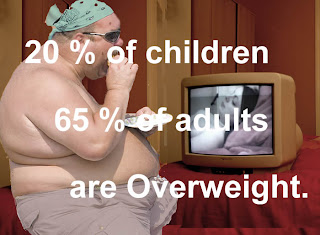
- 70% of men and 63% of women are overweight or obese

- Obesity accounts for 30000 deaths a year

- Obesity is estimated to cost the British economy over 2 bn of pounds every year

- One in five children in Britain eats no fruit at all

Lets talk about cause of obesity. From some estimation the main causes of obesity are:

1) Changing lifestyle - for example people are likely to eat fast food today, because they have a daily work, so their spare time is very limited, therefore most people are not able to cook and they have to "have a snack" every day, which can cause an obesity.

2) The falling real cost of processed foods because of economies of scale. Big food companies such as Mcdonalds are growing very fast, so prices for their food are falling (economies of scale - getting bigger - minimizing cost of production of each unit). This is (low prices) ,of course, very attractive for people, so most of them are starting to consume cheap fast food.

3) Calories.  There has been an increase in calorific consumption per day and decline in every day exercises taken. 

4) A rise in relative poverty. Lower income consumers prefer cheap food. As I sad before prices for fast food are falling (because of economies of scale, for example), so poverty would buy fast food more than expensive healthy food. 

5) Bigger portions.

In conclusion I would like to say that government has to fight with obesity. It can be done by subsidizing healthy food production, also by providing information campaign about harm of consuming fast food. Probably providing taxation on producers obese food could  be useful to stop obesity rising. All these actions are part of government intervention, that government has to do to solve market failure (obesity is one of examples of market failure).